'I'm always looking for the Hows and the Whys and the Whats,' said Muskrat, 'That is why I speak as I do. You've heard of Muskrat's Much-in-Little, of course?'
'No,' said the child. 'What is it?'
- The Mouse and his Child. Russell Hoban.

Go here to find out more.

Wednesday, 25 November 2009

The Big Kiwifruit at Te Puke.


Te Puke (Tay Poo-kay), 'Kiwifruit Capital of the World', is only about twenty minutes away from here, and as we were passing through, we called in at "Kiwifruit Country".  

We didn't take the tour nor ride on the little Kiwi-trains, but we did climb up the Big Kiwifruit and wave out the top.  


Oh, and you can click here to find out how to prepare them.
   

Tuesday, 24 November 2009

First year Diploma Art exhibition term 3


My student colleagues have given me permission to show their last term's final work here on my blog. I've posted their names too because you never know, you may see some of these names again in the future.  

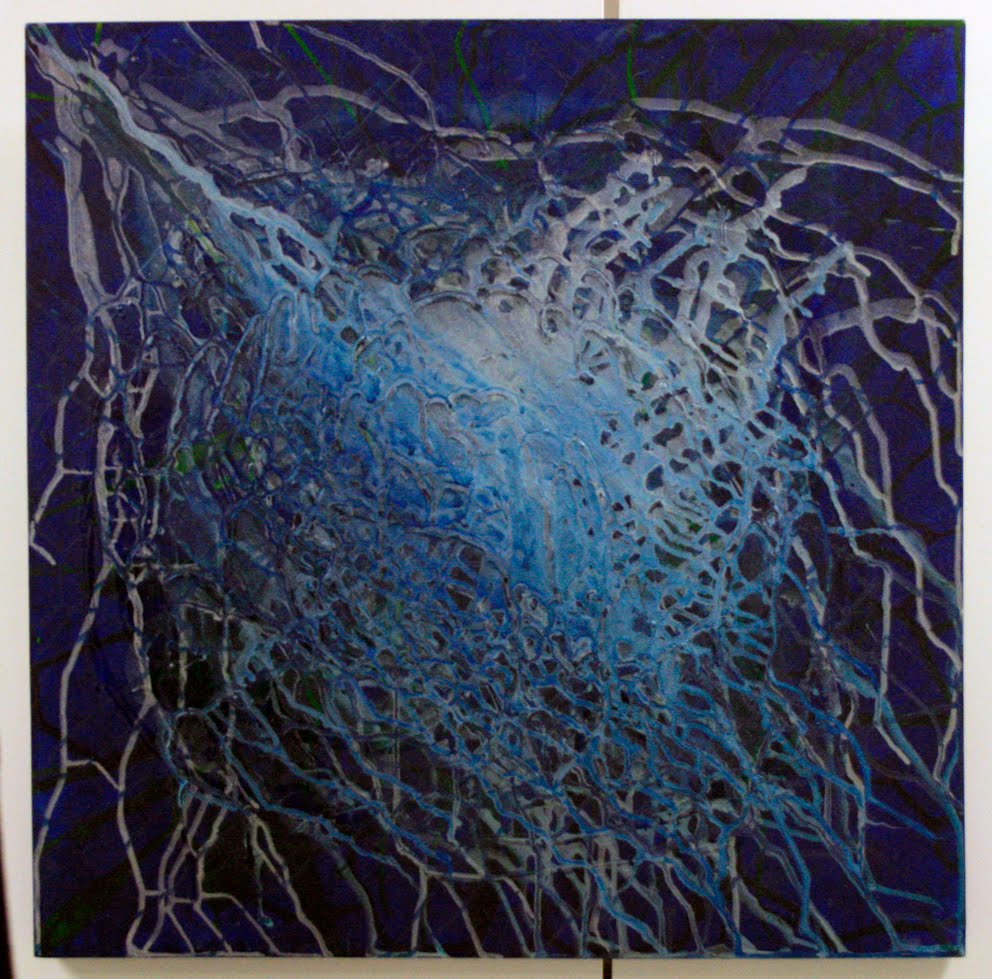
Our brief was very broad:  A painting, acrylics, on a provided (square) canvas.  I think you'll agree that there is certainly a wide variety of subjects and approaches.

Each should enlarge if you click on it.


"Space" Warbrick                                  Wendy Pedersen

Rex O'Brien                                    Roseanna Meredith

Paula Kahotea                             Katherine De Chevalle

Joanne Morgan                                 Michelle Corson      

Jamie Harkins                                    Ellie Lawler      

Courtney Hikuroa                                            Beau Cotton

Jenn Burrows                                             Andy Scott

Monday, 23 November 2009

My Art Studio

There's not really much to say really, the images are fairly self-explanatory.  Unless it's 'Yay, it's finished!" And possibly; "O I love my dear little cedar studio!"  (Which incidentally was made in kitset form in Hampshire. UK, of all places, and shipped out here to NZ.)


Sunday, 22 November 2009

Day Trip to Rotorua.


Ah, a picnic with friends on a crystal clear, early spring day on the shores of Lake Rotorua (Ro-tor-roo-ah).  Hard to believe this is in the heart of the city of Rotorua, isn't it?


We had a pleasant foot-soak in the thermal mineral water foot-bath in Kuirau (Koo-ee-row) Park.


Then we visited the Rotorua Museum of Art and History.  

The front gate, the Totara timber Prince's Gate Archway (built in a different spot and moved here later) is a stylised representation of a crown.  It was built in honour of the 1901 visit of the then Duke and Duchess of Cornwall and York, who were later to become King George V and Queen Mary.  It was decorated with greenery and illuminated with electric lights, a great novelty as electricity had only just become available in Rotorua.

The striking Tudor-style building, which is now the Rotorua Museum of Art and History, used to be the world famous Rotorua Bathhouse, which offered therapeutic treatments.  The New Zealand Government opened it in 1908, and hoped to tempt wealthy northern hemisphere patrons to travel to this "Great South Seas Spa".  Water from nearby springs was piped to deep pools, private bathrooms and Aix-douche massage rooms.  Men and women had separate wings.  You can wander around some restored areas and pretend you are relaxing after your electric treatment in the sumptuous rooms decorated with marble statues and lovely furnishings.  Unfortunately the corrosive mineral water ate into the pipes very quickly and so the grand scheme was plagued (sorry Robert) with insurmountable maintenance problems, aside from the dubious benefits of being mildly electrocuted, or soaking in and inhaling vast quantities of toxic substances. 


On the way home we stopped at our favourite little country store and got an icecream.


...which we ate down at the jetty on the shores of Lake Rotoiti (Row-tor-ee-tee). 

Thanks to Claire for images 1, 2, 5 & 7.

Tuesday, 17 November 2009

Walking up Mount Otanewainuku

Today we climb up Mount Otanewainuku.  This is an extinct volcano that is now clad in a generous lush cloak of New Zealand native forest, and is a bird sanctuary.  

We pause for a few minutes at the start to look at the Kiwi poster.  Kiwi are nocturnal birds so we won't see any but we read about them instead. 
Dogs are very good at disturbing kiwi so we've left Shelly at home today. 

 You can read all about the Otanewainuku Trust here.


As we climb up the track through the thick foliage, I try and point out species of interest:  a springy plant called Mangemange or 'Bushman's Mattress', which was used for just this purpose, the Mokimoki or  'Fragrant Fern' that smells very pleasant when it is dry - a cross between rose petals and sweet hay; and Kareao or 'Supplejack', a true liana - forest vine -  that has soft tender tips that taste of beans.  We also look for the epiphytic Kiekie which we want to try and weave into kete, or small basket-like containers.


Sometimes we spot the pink flags that mark the beginnings of the trapping lines. Volunteers check and re-bait the traps weekly to try and control the numbers of stoats, weasels, rats and feral cats that eat eggs and young birds.  Especially vulnerable are the ground-nesting birds like Kiwi*.  
 

As we approach the top, it gets steeper and steeper, so when we emerge into the sunshine, we're puffing, and very pleased!  We climb the steps to the platform just under the trig. marker and enjoy a drink and snack and the lovely view.


* For the millions of years before humans came to New Zealand (about 600 years ago), there were no mammalian predators at all.  (In fact the only mammals were a couple of species of bat.)  As a result, many New Zealand birds have lost the use of their wings, and nest on the ground.


Thank you Claire for the lovely images you took.

Monday, 16 November 2009

... and a blue beetle in a beech tree


I'm growing a few New Zealand indigenous trees in my garden.  Today I spotted a couple of these pretty little beetles wandering around on the trunk of my Red Beech*.  I wonder what they are.  Anyone know?


This page in my Guide to European Creepy Crawlies is not much help, but is the closest.  My handsome blue beetle has big thighs (ha ha), iridescent blue elytra (wing-covers) with those bright yellow patches, and is about 10 mm long.

* Click here to identify the different New Zealand beeches.

Apparently this is a flower longhorn beetle, Zorion species.  Thank you Eila and Peter.